
🚁 Why This Problem Mattered
Unmanned aerial vehicles (UAVs) and IoT devices are increasingly deployed in adversarial environments, yet they remain highly vulnerable to jamming attacks. These attacks can disrupt communication, affect mission success, or even render autonomous navigation impossible.
In this project, I set out to develop a solution capable of recovering and optimizing wireless signals under active jamming conditions—what we now call JamGuardian.

📡 How JamGuardian Works
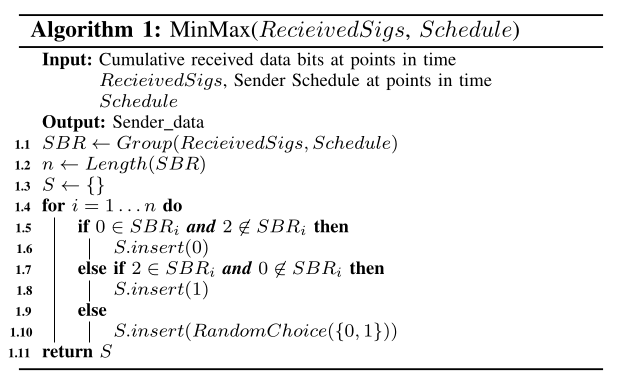
JamGuardian is a multi-phase framework combining physical-layer optimizations with intelligent signal reconstruction. The architecture consists of:
- Dirty Paper Coding to precode messages, ensuring resistance to known interference patterns.
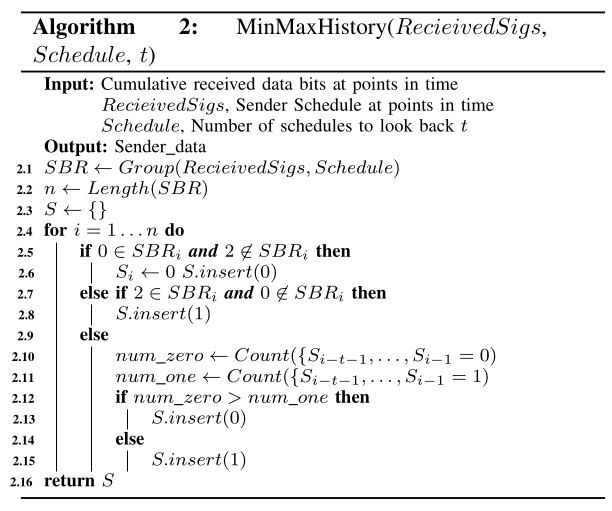
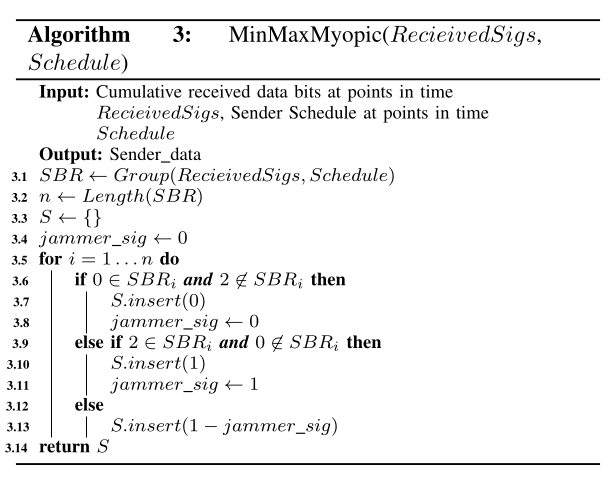
- Sliding Window Jamming Detection, enabling real-time identification of jamming signals in stream data.
- Parity-based Error Correction using Hamming codes for robust data recovery.
- Amplitude Modulation with Frequency Hopping to ensure secure, resilient communication paths.
This combination ensures that data not only survives jamming attempts—but adapts and optimizes under pressure.
🧪 Experimentation in a 6-Node Testbed
To validate JamGuardian, I deployed a testbed consisting of six wireless nodes arranged in a mesh topology. Key experiments involved:
- Injecting Gaussian noise at known and unknown points
- Measuring bit error rate (BER) with and without JamGuardian’s modules
- Evaluating latency, recovery rate, and throughput
- Switching between channel hop sequences for dynamic adaptation
Each configuration tested JamGuardian’s resilience under realistic jamming scenarios.
✅ Results That Proved the Approach
Here’s what we found:
- 📉 30% reduction in Bit Error Rate (BER) compared to baseline transmission under jamming
- ⚡ Improved latency and recovery time when the jamming signal was detected and isolated
- 🔐 Secure data restoration using error correction and amplitude modulation with channel hopping
These outcomes demonstrate that JamGuardian is not just a theory—it works under real-world stress.
🔭 Applications Beyond UAVs
Though designed for aerial mesh networks, the JamGuardian framework can be applied to:
- Military drones and battlefield communication
- Sensor networks in hostile environments
- Smart agriculture or mining systems with heavy RF interference
The modular architecture also makes it adaptable for future 6G and satellite-based communications.
🧠 "When noise is inevitable, resilience isn't optional—it's engineered."
This work is my attempt to make wireless systems that don’t just survive chaos—they learn and evolve through it.